Vusion (formerly VusionGroup or SES-imagotag) (VUSION)
Published 2026-02-05 • by heavymoatinvestments
Thesis Summary
Detailed Deep Dive
Vusion (formerly VusionGroup or SES-imagotag) is a global provider of retail IoT solutions. That sounds complex, but in plain terms it means electronic shelf labels (ESL) that allow retailers to automatically update prices and product information. It also includes i.e. cameras that analyze whether products on the shelves are running low. On top of that, there are software solutions that update the data and generate reports.
The company sells primarily to large retailers worldwide. You may have seen its products in stores such as Walmart, Ikea or Sephora. As early as 2022, the company had already won 30 percent of the world’s 250 largest retailers and 50 percent of the top 50 retailers as customers. That figure is likely significantly higher today.
After a strong track record of market outperformance, Vusion fell almost 30% in a few days without any news and is down 50% since ATHs! Maybe now is the perfect time to dive deeper into this fascinating business, while acknowledging that there might be negative news around the corner and insiders are already trading based upon it._A word of caution beforehand on valuing this business: Don’t look at unadjusted Free Cash Flows, because those are currently massively inflated by Working Capital changes (down-payments) and customer funded CapEx. A more realistic EBITDA to FCF conversion is around 50%, not 200%._
Vusion follows a hybrid product and services business model with three core building blocks.
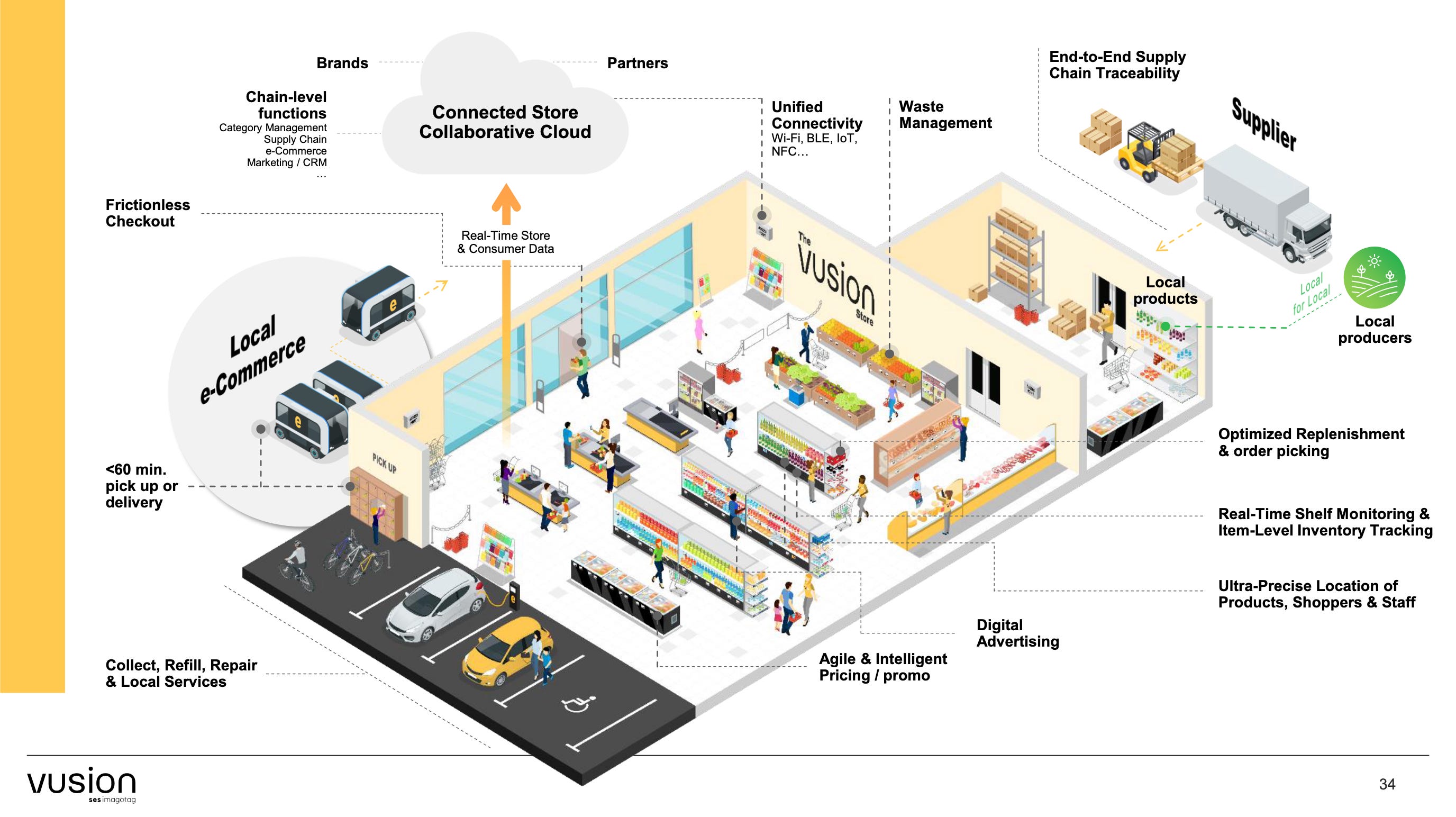

the ideal retail store, as Vusion imagines it in a few years
Hardware sales:
Primarily electronic shelf labels and sensors, which form the foundation for digitalizing store shelves. This so-called installed base needs to be replaced after several years (but I am skeptical that stores really need to replace it in size and won’t just replace the broken ones to save on CapEx). Each new generation offers more digital capabilities and therefore enables cross-selling of additional services to customers.
Platform and software (VusionCloud, EdgeSense, Memory, etc.):
This is the technological backbone of all Vusion offerings. It consists of cloud and edge software that connects, manages, and collects data from physical devices such as shelf labels, sensors, and cameras. It can be compared to a cloud platform like AWS, but specifically built for retailers.
Value-Added Services (VAS):
VAS represents the application layer built on top of the platform and is designed to solve concrete business problems for retailers.
This is where Vusion monetizes the data collected via the platform through services such as system integrations, data analytics, computer vision solutions (for example, cameras monitoring shelves and alerting staff when products need to be replenished), retail media solutions (such as digital advertising displayed on unused shelf space) and consulting services. These offerings typically generate higher margins and recurring revenues. VAS is expected to grow significantly faster than product revenue in the future.
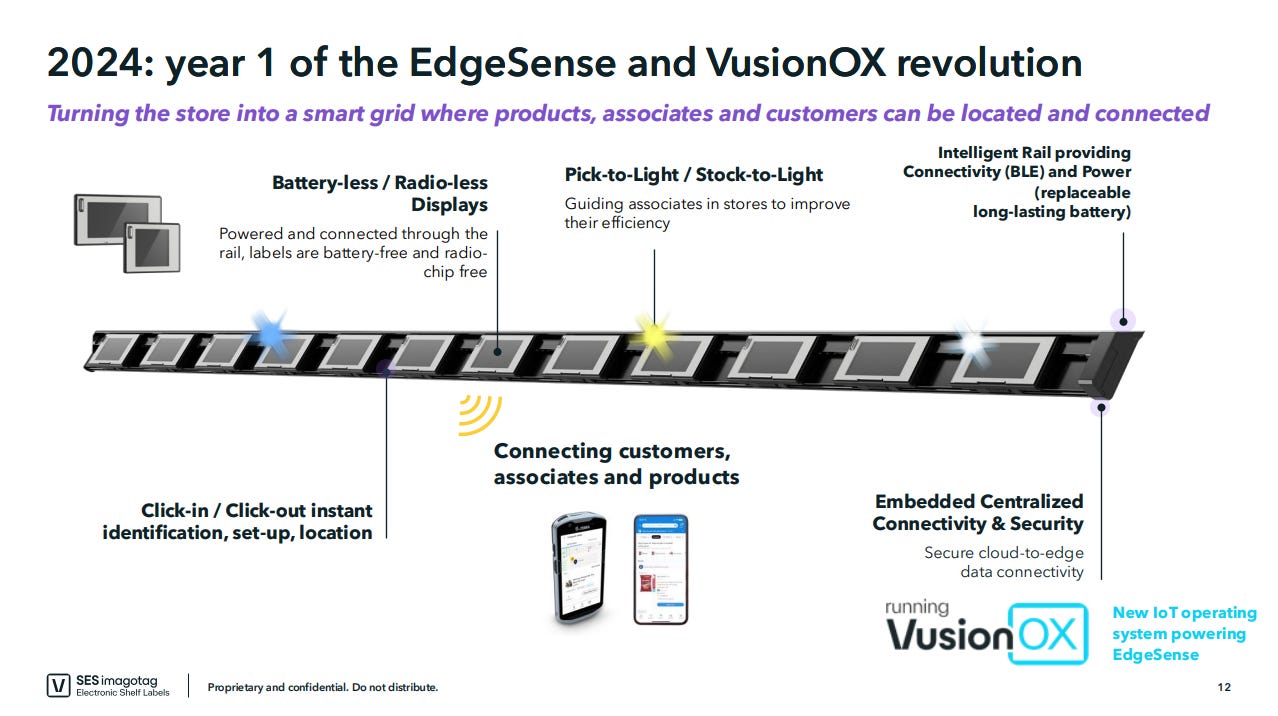

VAS is a key focus area for management, but it is somewhat difficult to understand. VAS can refer to either software or hardware and is used whenever revenue goes beyond the core ESL business. As a result, cameras (for machine vision), displays, or video rails (rails with video capabilities used for advertising) are classified as VAS, even though they are physical products. They are not pure ESLs, but part of data-driven or retail media use cases.
By increasing the share of recurring revenues, the predictability and profitability of the business should improve. Vusion focuses on battery-free devices that receive power through the rails to which they are attached.
Revenue of around €1 billion is split roughly 50/50 between EMEA and the rest of the world. The company has more than 350 customers. Revenue in the Americas has grown strongly in recent years, driven by a major cooperation under which all U.S. Walmart stores are being equipped with ESLs and cloud services to improve store efficiency.